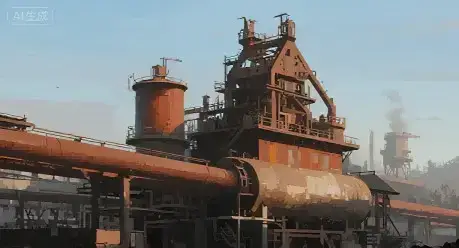
Pemex, burdened with significant debt, financial and operational constraints, now faces competition from Venezuelan oil.
Monterrey, Mexico: For more than 30 years, Dagoberto Ramos worked at Pemex, Mexico’s state-owned oil company, at one of its petrochemical complexes in the energy hub of Coatzacoalcos, Veracruz. Ten years ago, the specialist in ethylene production opted for early retirement, fearing that deteriorating maintenance routines were putting him at risk of injury and liability. He was particularly concerned about being blamed for an accident resulting from neglected infrastructure. “Previously, the production plant received a month of maintenance, but this was gradually cut down to 20 days, and sometimes even 15, where only the most urgent tasks were prioritised,” he said. “The risk of a potential catastrophe was very real, both for the staff and for the surrounding communities.”
On April 20, 2016, less than a year after Ramos left, an explosion rocked the Pajaritos complex, where he had worked before transferring to the Morelos complex just five kilometres away. The incident killed 32 people and injured more than 130 workers. Pemex, over the years, has been responsible for soil contamination, rising methane emissions, and pipeline spills, with chronic leaks impacting local communities and marine fauna. This lack of infrastructure maintenance has worsened as the state-owned giant contends with significant financial and operational constraints and a massive debt burden.
For the past two decades, Pemex has struggled to increase production as mature oil fields decline, while it carries a debt of $100bn and has failed to attract private investment. Concerns are growing for the sustainability of the oil company and the future of Mexico’s energy sector amid regional changes, financial instability and a strong reliance on imports from the United States. Despite being a crude oil producer, Mexico remains dependent on refined products and natural gas imports from the US. Mariana Castaneda, director of Grupo Estrategia Politica, a public affairs consulting firm, told Al Jazeera that domestic fuel production currently falls 21 percent short of demand. This gap, she said, is expected to widen, even as most refineries operate at or near their maximum capacity.
Rafael Vaquera Salazar, a professor at Monterrey Technological University (TEC), told Al Jazeera that despite the country’s vast reserves and long history of extraction, the outlook for recovery remains bleak. Now there is a new challenge. Following the US invasion of Venezuela that resulted in the abduction of then-President Nicolas Maduro and his wife on January 3, the regional energy landscape has become unstable, complicating long-term planning. While shifts in Venezuela’s oil industry could impact Mexico’s own production, Vaquera said that the timeframe and specific conditions remain uncertain.
Both Venezuelan and Mexican crude are heavy, and US Gulf Coast refineries are specifically equipped to process this type of oil. “A competitive situation could arise where whoever offers the biggest discounts will secure the refining capacity,” he pointed out. About 60 percent of Pemex’s crude oil exports go to the US. While imports from Venezuela were limited by sanctions, volumes are expected to rise with renewed activity. Even though oil executives told US President Donald Trump that significant reforms are needed before they commit to Venezuela, a market that Exxon CEO Darren Woods called “uninvestible,” that may not really be the case.
In the oil industry, it doesn’t really matter who you do business with. What matters is the guarantee that investments will be secure and stable, Vaquera told Al Jazeera. “If I have certainty and stability, I can make investments,” he said. “Even if it means dealing with the devil.” Mexico has been sending oil shipments to Cuba since 2023 through Pemex subsidiary Gasolina Bienestar. These shipments, which were once sporadic, became consistent under the administration of Andres Manuel Lopez Obrador, who framed them as humanitarian aid.
Last year, between January and September 30, Mexico shipped 17,200 barrels of crude oil per day and 2,000 barrels of refined products, according to a report submitted to the US Securities and Exchange Commission. Mexico’s President Claudia Sheinbaum has also defended the oil shipments as humanitarian aid, yet they continue to fuel tensions with the Trump administration. On January 26, reports emerged that Pemex had halted oil shipments to Cuba amid rising tensions. The following day, Sheinbaum declined to confirm or deny the reports, stating that the move was a “sovereign decision” by the state oil company.
Camila Acosta, an independent journalist in Havana, told Al Jazeera on January 15 that 60 percent of the island faces blackouts. These are driven by fuel shortages and crumbling infrastructure, along with declining oil shipments, the longstanding US embargo and the Trump administration’s tactic of seizing Venezuelan oil tankers. “People are fed up with the blackouts, having to cook with firewood, not being able to refrigerate food – or having it spoil – and the lack of water because, without electricity, it can’t be pumped,” she said. Acosta said that Mexico now ...
The complete content requires login
You can view the full content after logging in. If you don't have an account, please register first.