The Democratic Republic of Congo (DRC) intends to sign a minerals and infrastructure partnership with the Trump administration on Thursday, as part of a series of agreements aimed at resolving the long-running conflict in the resource-rich nation’s eastern region. U.S. President Donald Trump is scheduled to meet with the presidents of the DRC and Rwanda in Washington on the same day to oversee the signing of a bilateral peace accord between the two Central African countries. The three-decade-long conflict is one of several global disputes Trump has claimed to resolve through dealmaking, though ongoing clashes persist between the Congolese army and fighters alleged to be backed by Rwanda.
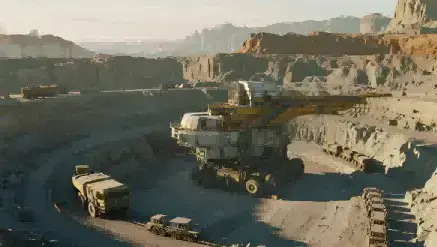
In addition to the peace accord, the two Central African nations will sign an economic agreement, while the U.S. and DRC are expected to formalize their own partnership. Tina Salama, spokesperson for Congolese President Felix Tshisekedi, stated that the U.S.-DRC deal will position the DRC as a continental energy hub, a logistical and strategic hub, and an indispensable player in critical mineral supply chains. The U.S. has targeted Congo’s mineral resources to secure key inputs for its technology, energy, and defense sectors, and to reduce China’s dominant position in the global trade of such resources.
The DRC is the largest sub-Saharan African nation by landmass and boasts abundant reserves of strategic metals including cobalt, copper, tantalum, lithium, and gold. Salama noted that the ...
However, Salama emphasized that the implementation of these investments is contingent on Rwanda ceasing its support for rebel groups in eastern DRC. Since early 2023, the Rwanda-backed M23 rebel group has occupied the region’s two largest cities, with recent clashes reported between M23 and the Congolese army in South Kivu province. Congolese government spokesperson Patrick Muyaya accused Rwanda of lacking commitment to peace, stating that true peace requires the withdrawal of Rwandan troops from DRC territory.
Rwanda has denied supporting the M23, asserting that its troops have only taken defensive measures to secure its borders—specifically against the FDLR, a rebel group linked to perpetrators of the 1994 Rwandan genocide against Tutsis. As part of the U.S.-backed peace agreement, the DRC has committed to neutralizing the FDLR. Rwandan government spokesperson Yolande Makolo stated that peace depends on the DRC ending state support for the FDLR and other anti-Rwanda forces, which would allow Rwanda to relax its defensive measures—something she claimed has not yet occurred.
The complete content requires login
You can view the full content after logging in. If you don't have an account, please register first.